






























Featured image courtesy of Jackie Vitetta
Geoff Brent, owner of the Black Sheep in Colorado Springs, gets a kick out of telling people he was at the launch of the stalwart music venue, which is celebrating 20 years in business.
“I feel like so many people ‘grew up’ at the Black Sheep,” he says. “I talk to so many people who spent their teenage years coming to shows here. It blows their mind that I got to see the beginning – as far as they know, it’s just always been there.”
Brent says the venue is closer to their full vision than ever, both in the experience and in the consistent track record of artists that perform there – new artists on their way to success, bands who have already “made it,” and talented local acts.
“We have a lot of just really incredible bands in Colorado Springs,” he says. “I think there are a lot of people creating just to create and not chasing whatever is most popular at the moment.”
Just like the Black Sheep, southern Colorado’s music scene is evolving. Live music opportunities – for audiences and artists – continue to expand. And even with that growth, strategic “level up” opportunities remain in a scene that has not reached its full potential.
David Siegel is a product of the Colorado Springs music scene. Now executive director of the Ent Center for the Arts, he studied at the Colorado Springs Conservatory and performed monthly gigs across the city with his high school band. After returning from New York City in 2012, he joined local bluegrass band Grass It Up and still plays fiddle with the group.
When Siegel brings the best musicians from around the country to the Ent Center, he creates opportunities for them to interact with the broader public. The recent Jazz at Lincoln Center Presents: Great American Crooners concert, for example, included a free masterclass for students and independent jazz musicians. There are over 400 ticketed events at the Ent Center each year, and many of them are live music.
“My work at the Ent Center makes me a better musician, and my work as a musician makes me a better leader for the Ent Center,” he says.
The Colorado Springs Philharmonic is celebrating its 100th anniversary, shaped by a host of remarkable musicians, devoted supporters, and a community that believes in the transformative power of live music. In the upcoming 2026-2027 season, the Philharmonic will focus on the story of us, embracing narratives as a force for connection and change.
According to the Philharmonic’s music director Chloé Dufresne, “Familiar masterpieces will stand alongside new voices, films unfold in sound and light, and genres will meet with fearless curiosity.”
For Siegel, recent changes in the southern Colorado music scene mirror those occurring nationally. Tools and levers formerly reserved for record labels are now available to independent musicians, and there are more ways for your music to be heard, including online releases and house concerts.
That matches with a music scene Siegel describes as more egalitarian than in larger cities.
“There are lots of opportunities for emerging artists to put in their 10,000 hours on the bandstand that don’t exist in more established communities,” he says.
That freedom comes with DIY responsibility – musicians must create social content and build promotions to reach audiences in a crowded information environment. It also means audiences must increase their expectations and be discerning for quality performances.
One of the most enduring bands from southern Colorado is The Martini Shot. Trumpet player Brian Person, who joined the band in 2002, is also the band’s unofficial manager.
In The Martini Shot’s early days, most of the live music offerings in Colorado Springs were concentrated downtown. That’s shifted, Person says, especially with the growth of community events, neighborhood concert series, and outdoor festivals – the vast majority of which offer live music.
“Now it feels like every part of town has something happening during the summer,” he says. “Live music is being brought directly into neighborhoods and public spaces instead of people always having to go find it downtown.”
A similar shift has occurred in Pueblo, Person says, and the ongoing growth of the downtown riverwalk means that area has also become a live music hub.
“Live music is integrated into communities. When you go to events around the area, music is often right at the center, and it creates a great shared environment for people of all ages,” he says.
For Siegel, one of the biggest needs for southern Colorado music is to build out the “middle rungs” of the local venue ladder. The “jumps” required to get from one venue size to the next can be prohibitive, and artists can often get stuck on one rung of the ladder.
“It’s hard for local musicians to make that jump, from a monthly coffee shop appearance to a ticketed larger venue,” he says. “It would be a boon for audiences and musicians to invest in those opportunities.”
All three agree that support for original music is critical to strengthening the scene.
“Building a stronger original music scene takes both infrastructure and community support,” says Person. “It means venues willing to showcase original artists, and it also means audiences showing up to listen and discover new music.”
This work can also help define the region’s music scene for years to come, Siegel adds.
“Original music defines the ethos and roots of what makes a music scene unique.”
The Martini Shot and Grass It Up both provide a sense of continuity, as two of the longest-running bands in southern Colorado. Proving that bands can not only sustain themselves over time, but also adapt and grow, is important.
“I also hope we provide a bit of a blueprint, or at least some ideas, for other bands about how to build something that lasts,” Person says. “Not just musically, but in terms of relationships, organization, and how you show up for a community.”
Most of The Martini Shot’s members are current or former music educators, so it’s important for them to support younger musicians and build the right culture.
“Whether that means connecting people to opportunities, helping introduce bands to venues, or inviting student musicians to sit in and get real performance experience, we try to create pathways where we can,” Person says. “We all benefited from people helping us along the way, so it feels important to do the same for others.”
Siegel also thinks southern Colorado bands playing outside the region is a great sign. Thinking beyond geographic boundaries – both in exporting and importing great music – is a critical next evolution.
“For our music scene to continue to grow, we have to think about it at a statewide level,” he says.
———
Southern Colorado is full of venues to catch live music any time of year. Here are just a few to check out:
Colorado Springs
Lulu’s Downtown, Pikes Peak Center for the Performing Arts, The Broadmoor World Arena, The Black Sheep, Ent Center for the Arts, Sunshine Studios Live, Ford Amphitheater, Phil Long Music Hall, Stargazers Theatre, Dizzy Charlie’s Music & Events, Colorado Springs Philharmonic
Pueblo
Pueblo Memorial Hall, Brues Alehouse Brewing Co., Copper River Family Entertainment & Events, El Nopal’s Blue Cactus Listening Room
Manitou Springs
Kinfolks, Armadillo Ranch
Woodland Park
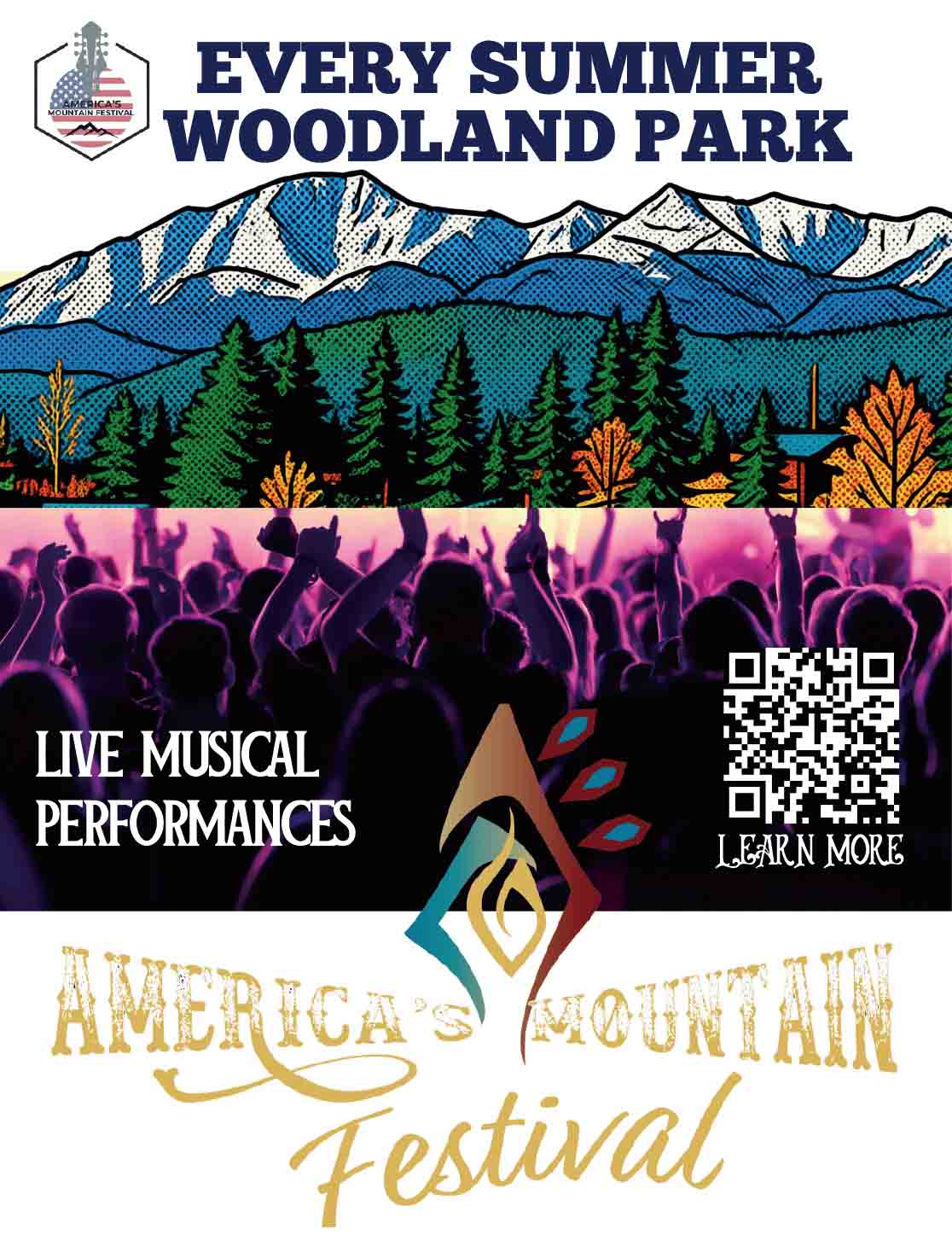
Ute Pass Cultural Center, Crystola Roadhouse
Cañon City
Fremont Center for the Arts
Florence
Historic Rialto Theater
———
Why Music Matters
Geoff Brent:
“As more things become automated, become tech, become AI, live music is such a human experience. It’s such a pure experience for me, where you can meet new people and watch a person put their entire heart into sharing emotions. There is literally nothing like it in my opinion.”
David Siegel:
“Music is a universal language; it helps us express feelings that we can’t otherwise access. It’s not too much of a stretch to say that our community, and many communities, suffer from a crisis of empathy. Music is a tool to help us be more empathetic, it’s just a really joyful, fun thing — and we could all use more fun. To dance at the Black Sheep or Lulu’s Downtown, to sit at the Ent Center or Pikes Peak Center and be immersed in a live performance for a couple of hours, is an awfully valuable thing right now.”
Brian Person:
“Everyone has responsibilities, stress, and challenges in their lives, and music can create moments of joy, reflection, or relief. It gives people an opportunity to step outside of their routines and reconnect with themselves and with others.”
Chloé Dufresne
“This milestone moment is rooted in storytelling — the way music carries memory, imagination, and meaning across generations. Music that reflects who we are and who we are becoming. Our story is profound, but unfinished.”