
























Featured image courtesy of Crested Butte Museum
Some people look at Colorado’s majestic mountains and see beauty, nature and solitude.
Others look at the same mountains and see a challenge. Conquering the Rockies on both skis and snowboards may be Colorado’s most popular outdoor activity, attracting some 14 million people each winter, more than any other state.
But dreamy terrain comes in more forms than deep powder, and for mountain bike enthusiasts, that means brown and rocky terrain. The sport offers an adrenaline rush that can be enjoyed year-round in many places and, at higher elevations during the summer, pits your wits and wheels against gravity and the trail.
Over the past 50 years, mountain biking has become as beloved as anything on snow, and Colorado has long played a central role in its development. It has deep roots in Colorado today, and vice versa. Few places can boast such a variety of biking trails as Colorado.
Here is the ultimate guide to getting out on the trails on a bike, for a weekend, a week or a lifetime.

A mountain biker sends it down a rock garden in Winter Park courtesy of Katie Sturgis
The story of mountain-biking in Colorado can be traced back to Crested Butte in the 1970s. In a depressed former mining town in the central Rockies, the construction of a ski area attracted a new class of young people seeking adventure.
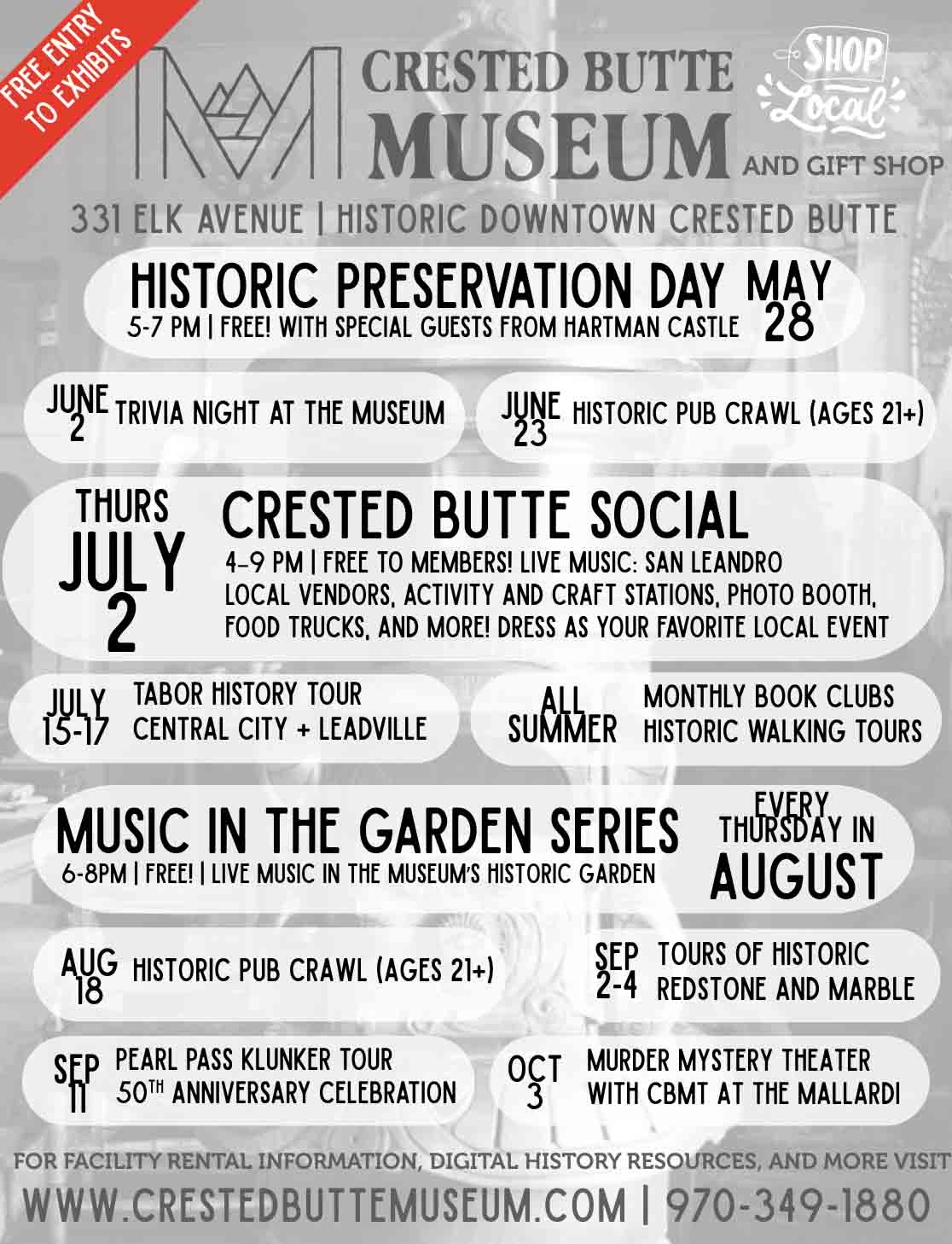
Since there were no paved roads in town, locals rode what they called “klunkers,” no-frills, durable one-speed bikes that could handle the rough terrain. In the summer of 1976, a group decided to ride their klunkers over the high-altitude Pearl Pass into Aspen, to hit on girls in that posh resort town.
Said the Crested Butte Pilot newspaper: “The group and groupies made camp, enjoyed a steak fry and consumed one keg of beer, three bottles of Schnapps, two gallons of wine, and three bottles of champagne.”
By all accounts, they found Aspen had just as few single women as Crested Butte. The episode might have been lost to history had the Bohemian magazine CoEvolution Quarterly not heard of it. The magazine did a story, and by 1978, word of the Pearl Pass ride had reached a group of riders in California, including mountain bike pioneers Joe Breeze, Charlie Kelly, and Gary Fisher.
These were guys who, since the mid-’70s, had been designing and tweaking bicycles to race down the rough fire roads of Marin County, Calif. They came out for the 1978 Pearl Pass ride, and their bikes put the one-gear klunkers to shame.
The event became Fat Tire Bike Week in Crested Butte, a seminal event that helped launch mountain-biking into the popular imagination. It continues to this day.
But the soul of mountain-biking has expanded far beyond Crested Butte. The Front Range, with a milder climate than the high Rockies, has become a biking haven.
The MTB Project (MTBproject.com) contains information on 181,000 miles of biking trails, including 5,520 trails in Colorado.
Colorado Springs offers some of the most accessible trails near a major city center. North Cheyenne Canon Park, just west of the city, has a wide variety of thrilling bike trails, including Captain Jack’s Trail, a multi-use trail that winds through the pine forests and scree slopes of the city’s mountainous skyline. Other great options in the Pikes Peak Region include Palmer Park, Red Rock Canyon Park and Garden of the Gods.
Canon City, to the south of Colorado Springs, has an even milder climate, so many trails can be ridden snow-free year-round. With long views of the distant Sangre de Cristo Mountains, the Oil Well Flats Recreation Area offers 12 miles of trails usable in any season.
Higher in the mountains, summer riders can find some of the most scenic and gratifying rides known to mankind. One such ride is the 401 Trail near Crested Butte, a wildflower-strewn paradise often ranked as Colorado’s best bike trail. Another epic adventure awaits on the Monarch Crest Trail, which rises high above timberline in the mountains west of Salida.
Hartman Rocks, near Gunnison, has 45 miles of trails in a desert environment that can be ridden for most of the year.
The area around Fruita and Grand Junction on the Western Slope has become known as some of the finest desert riding in Colorado, comparable to Moab without the crowds.
Closer to Denver, the Buffalo Creek area in the foothills southwest of the city offers 24 miles of trails through thrilling singletrack and scenic canyons.
One of the most common complaints about mountain-biking is the sheer exertion required to pedal up steep, dusty trails.
Fortunately, after the snow has melted, many ski areas switch to summer operations, which include chairlifts to haul you and your bike up the mountain.
Ski areas of Crested Butte, Granby Ranch, Winter Park, Keystone, Steamboat, Durango, Vail, Copper Mountain, Breckenridge and Telluride all operate lifts in summer months to haul mountain-bikers to the top of the hill.
Much like in skiing, trails are rated by green, blue and black. The season is short—usually mid-summer to early fall—but lift-served biking is a great way to enjoy the adrenaline rush without the feeling that you might pass out from the exertion of pedaling uphill.
Resorts with downhill biking offer lessons, which are a great option for visitors new to the sport.
Tips & Tricks
Not all mountain bikes are created equal. If planning a lift-served excursion or mostly downhill ride, consider renting a full-suspension bike. It has the durability to handle all trail conditions, and the pedals are mostly for show.
Hard-tail bikes are the most common design used for cross-country rides (a variety of up and down on the trail).
For conditions ranging from snow to sand, consider a fat tire bike, with bulbous tires to eat up the terrain more efficiently.
E-bikes, short for “electronic bikes,” are the latest innovation in mountain-biking. These have motors that assist with uphill and flat rides and can help make the sport accessible to all fitness levels.
Trail Etiquette
Be sure to know where you are riding. Bikes are not allowed in federal wilderness areas.
Don’t ride when trails are muddy because it can cause permanent ruts in the trail surface.
Don’t cut switchbacks, as that causes erosion.
Cyclists yield to hikers, runners and horseback riders.
Looking for a Place to Stay
The Buffalo Lodge in Manitou Springs offers lodging and free single-speed bike rentals for its guests. For those wanting a more specialized pedal, they can hook you up with a local bike shop.
In addition, the Manitou E-Bike Company in Old Colorado City has e-bikes for rent or for sale.
Prefer a Different Ride?
Check out the Academy Riding Stables for Horseback Riding in Garden of the Gods Park.