




























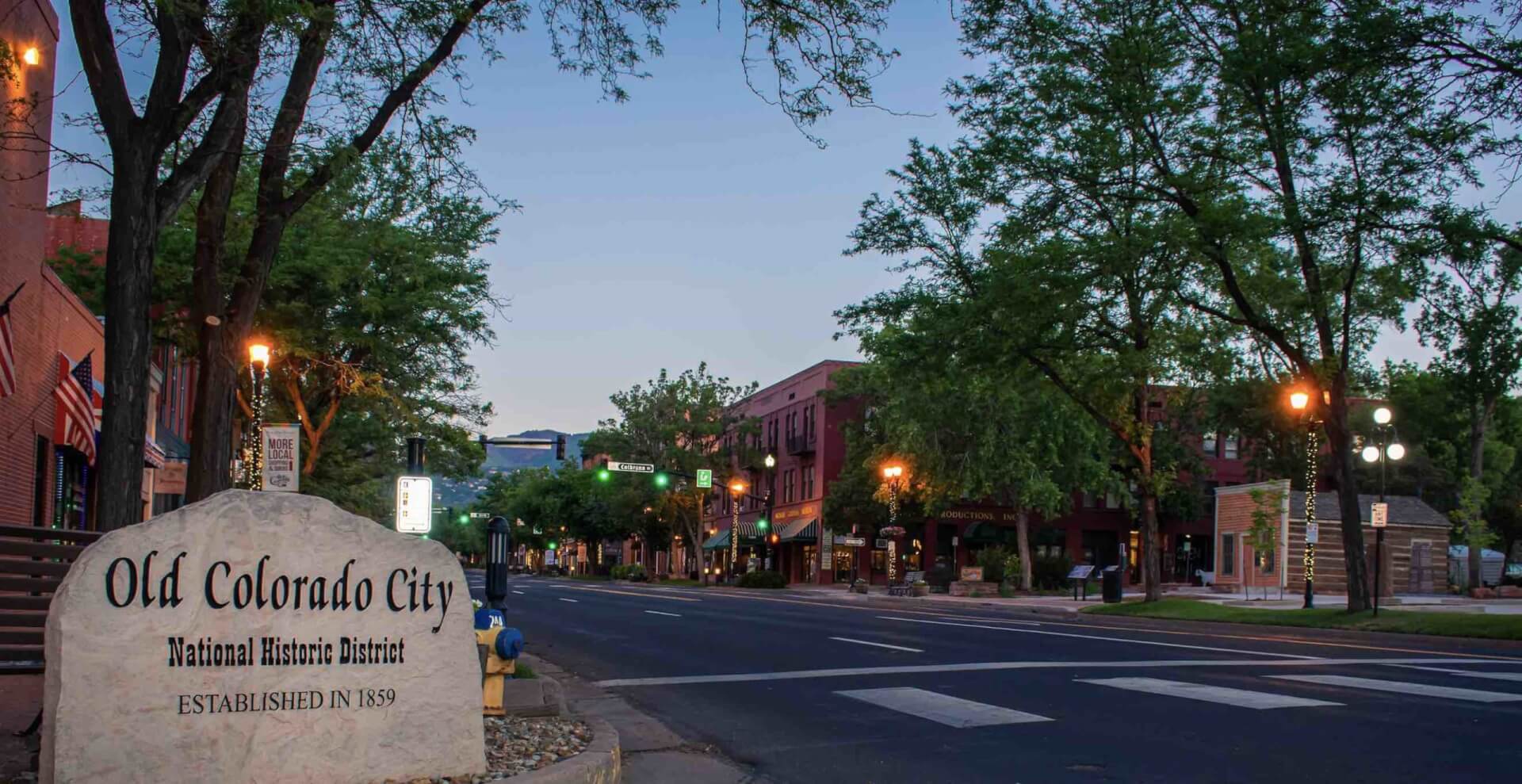
It’s 7:45 on a warm Saturday morning. We’re walking our dogs through Old Colorado City. Most of the stores are closed, but the 130-year-old commercial district is coming to life.
At Carnelian Coffee half a dozen customers enjoy the sunlight streaming through the windows. Across the street, La Baguette does a brisk business in freshly baked bread, pastries and most of all (you guessed it!) perfect, crusty baguettes. Two blocks farther to the west, the second wave has already hit Bon Ton’s Café, the iconic breakfast spot that has been open since 6 AM.
By early afternoon, the good weather will bring out scores of strollers, potential customers for the merchants along Colorado Avenue and the side streets. The merchants are wildly diverse, an Alice’s Restaurant of retail (as in, you can get anything you want).
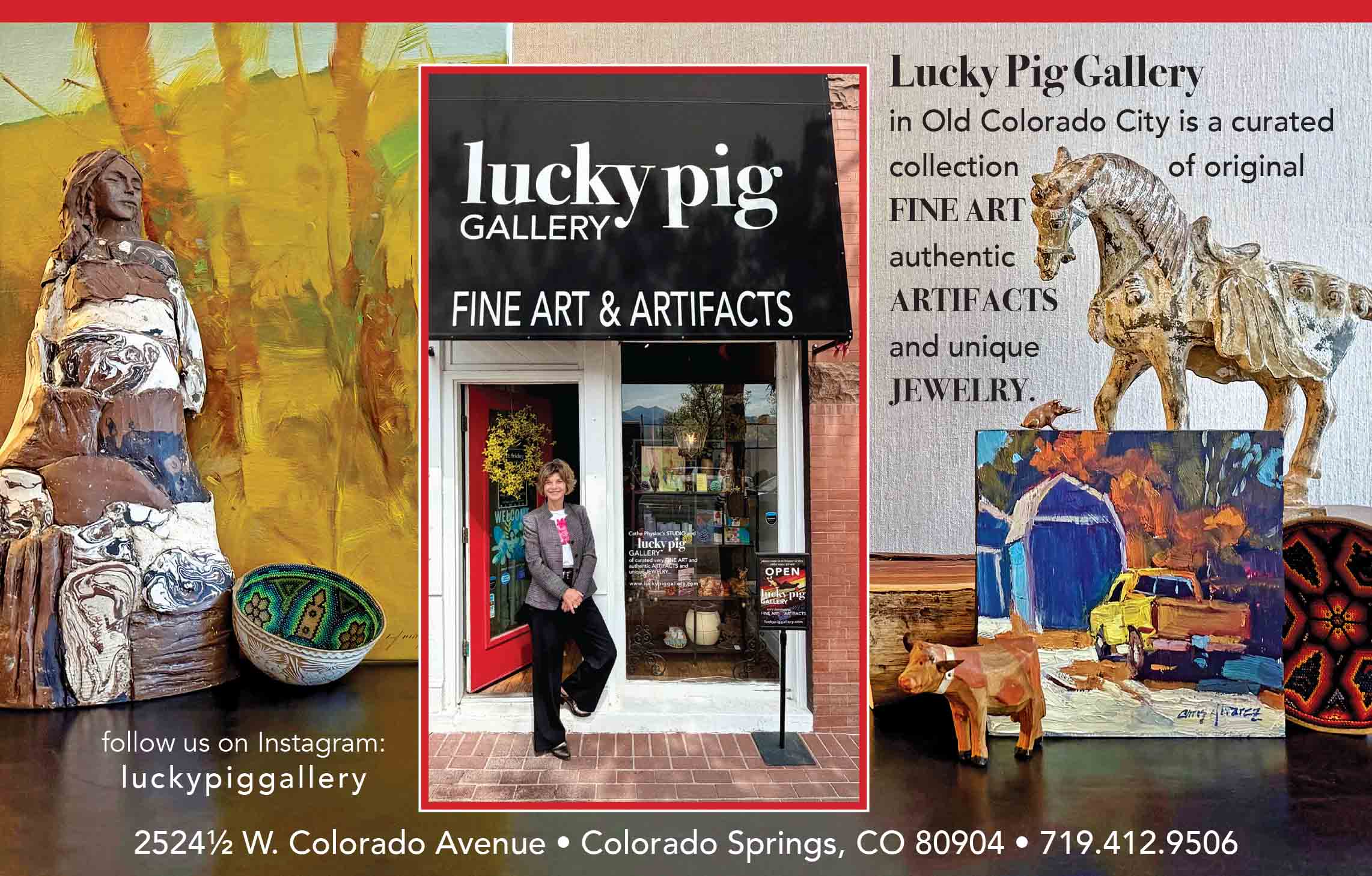
Want a cool little top from Febra’s, a painting from 45 Degree Gallery, locally thrown ceramics from Hunter-Wolff, Greek food from Jake & Telly’s, or Italian fare from Paravicini’s? What about a puposa, from Monse’s? Or gluten-free tapas from Tapateria, extraordinary pizza from Pizzeria Rustica, and great bar food, craft beer and the opportunity to make a fool out of yourself singing karaoke at Thunder & Buttons? Perhaps just a simple scoop of ice cream?
It’s all here.
Fifty years ago, historic Colorado City was dying. The 19th-century brick commercial buildings that lined Colorado Avenue were mostly vacant and crumbling. The few businesses that remained attracted a strictly local clientele.
Dismayed city staffers floated a delusional plan to tear down all the existing buildings and offer the vacant ground to a manufacturing company, which would then create jobs for unemployed west-siders.
Happily, that didn’t happen. Working in tandem with city officials, local businesses and property owners, neighborhood resident Dave Hughes conceived and implemented a plan that led to the preservation, renovation and revival of this national historic district.
Appropriately, there are no chain retailers in the historic core of Old Colorado City. Locally owned businesses dominate the avenue. And in every building, history is alive and present.
Gamblers, Grifters and Good Times in Colorado City
Colorado City was founded in 1859, 12 years before Colorado Springs. By the late 1880’s, the two neighboring cities couldn’t have been more different.
General William Palmer’s genteel little town banned manufacturing industries, racetracks, gambling, breweries, distilleries, liquor sales, saloons and bawdy houses; Colorado City welcomed them all. Its streets were full of adventurers, scammers, hard-drinking miners and other original souls who wouldn’t have lasted a week in the staid precincts of Colorado Springs. It was a rip-roaring little city, as lively, noisy and interesting as Greenwich Village in the 1950’s or San Francisco in the 1960’s.
The Village had Jack Kerouac, Jackson Pollock, Allen Ginsberg and dozens of other memorable figures, while Haight-Ashbury was home to Ken Kesey, Jerry Garcia, and Gracie Slick. Colorado City in the 1880’s and 1890’s had “Eat ‘Em Up” Jake, Laura Bell and “Prairie Dog” O’Byrne, larger than life characters who helped define a rollicking, dangerous era in the history of the Pikes Peak Region.
“Eat ‘Em Up” Jake
“Eat ‘Em Up” Jake (last name unknown), an itinerant gambler and con man, came by his nickname in a high-stakes poker game in Colorado City in 1889. Here’s how the Pittsburgh Press reported the story 13 years later, on Sept. 11, 1902.
“Money was plentiful and gambling was easy enough (in Colorado City),”the paper reported, “but the stranger had to be on the square. Crookedness in a game of cards simply meant death to the man who practiced it and the average stranger was not willing to take the chance.”
But “Eat ‘Em Up” was not your average stranger. As the Press delicately put it, “…he suddenly found himself in a hole at a big game of poker, and he had staked his last cent. The pot was a four-figure pot. He had in some way secured an extra card in the deal. He had a hand that it would take a royal to beat, but he had an extra card and he was in a fearful dilemma. He knew that if he slipped the card up his sleeve or hid it about his person in any way he would get shot. The players had just ordered a round of sandwiches. His sandwich was placed before him on the table and he picked it up and catching the attention of the other players diverted somewhat, he slipped his extra card in between the slices of bread and began to eat it with the hurry and relish of a starving beggar.”
The scam worked, the pot was his, and he worked the con successfully thereafter. According to the Press, he retired from his life of crime after a few years and joined the police force in an undisclosed Southern city, “a rattling good fellow and an efficient officer.”
Laura Bell
Born in Missouri in 1861, Bell had a difficult and chaotic childhood. Her father was committed to an insane asylum when she was a child. She married in her teens, bore a child and made her way to Colorado, where she settled in Salida in 1881. She apparently divorced her first husband, and subsequently married Tom McDaniel, a murderous crook who persuaded Bell to burn down her house for the insurance. McDaniel quarreled with the ex-con that he’d hired to torch the place, a gunfight ensued, and McDaniel shot his former employee five times while Laura looked on screaming.
Bell left Salida soon after, and reappeared in Colorado City in 1888, without McDaniel. She may have initially worked as a prostitute, but she soon became Colorado City’s most famous and successful madam, running her business from 1889 to 1917, when she died in an automobile accident.
According to Jan Mackell’s 2003 book “Brothels, Bordellos and Bad Girls: Prostitution in Colorado 1860-1930,” the one-time charge for one of Laura Bell’s girls was $250. In an era when most careers were closed to women, and skilled workmen were lucky to make $5 a day, the world’s oldest profession must have had a certain appeal. The discovery of gold in Cripple Creek created a newly rich and extravagant population of mining millionaires, who may have formed her client base.
Ever the sensible businessperson, Bell paid off cops and judges, contributed generously to churches and charitable organizations, and lived discreetly – so much so that no photos or contemporary descriptions of the famous “Queen of the Tenderloin” endure.
We know that she was smart, we presume that she was once beautiful, but what little knowledge we have comes from court records and the fanciful accounts of her contemporaries, such as…
“Prairie Dog” O’Byrne
In 1888, John “Prairie Dog” O’Byrne was a young passenger brakeman between Denver and Colorado Springs on the Atchison, Topeka and Santa Fe Railway. But that was just a job – his true calling lay elsewhere.
In the spring of ’88, O’Byrne acquired a pair of orphaned elk in Denver, took them home and “broke them to drive single and double.” Contemporary photographs show the two antlered beasts in harness pulling a modest open carriage driven by their owner. The elk were dazzling, disruptive and a source of great amusement to Prairie Dog. In his 1922 autobiography, he gleefully describes an afternoon’s excursion in Denver.
“My elk team was always unwelcome in Denver; the society people of Capitol Hill in Denver had many fine turn-outs with blooded horses and expensive broughams and cheap drivers, and they took many fast rides away from me and my elk team when the horses would get a smell of my elk. I have seen as many as three runaways at one time, women screaming at the top of their voices and the driver hanging on for dear life.”
Predictably, the Denver cops banned Prairie Dog from Capitol Hill, but the animals were always welcome in Colorado City.
“It made no difference what time day or night you came to Colorado City,” O’Byrne wrote, “the excitement and amusement were continuous. If we did not see two or three gun plays or one or two shot, we considered business pretty quiet.”
In a memorable piece of doggerel, Prairie Dog recalled those good times.
“In Old Town I cut quite a dash; I took many pains to spend all my cash and I drove through the streets with Laura Bell by my side – a span of elk, how fine we did ride!”
But the good times came to an end, as the Cripple Creek boom ended, the saloons closed and Colorado City faded slowly away. Prairie Dog mourned.
“Old Town isn’t what it used to be, times have made a wonderful change and today Old Town resembles an old dog with the mange.”
But O’Byrne might enjoy today’s bustling Old Colorado City, with its restored 19th century buildings housing shops, restaurants, bars, and even a saloon or two. He’d be pleased to note that his elk are memorialized by a modern saloon bearing their names – Thunder and Buttons.